
Why do cheese curds squeak?
Fresh cheese curds squeak because elastic strands of casein protein, tightly bound by calcium, rub against your tooth enamel when you bite. The friction creates a high-pitched vibration around 1-2 kHz. The squeak fades within 12 to 48 hours as the protein structure relaxes.
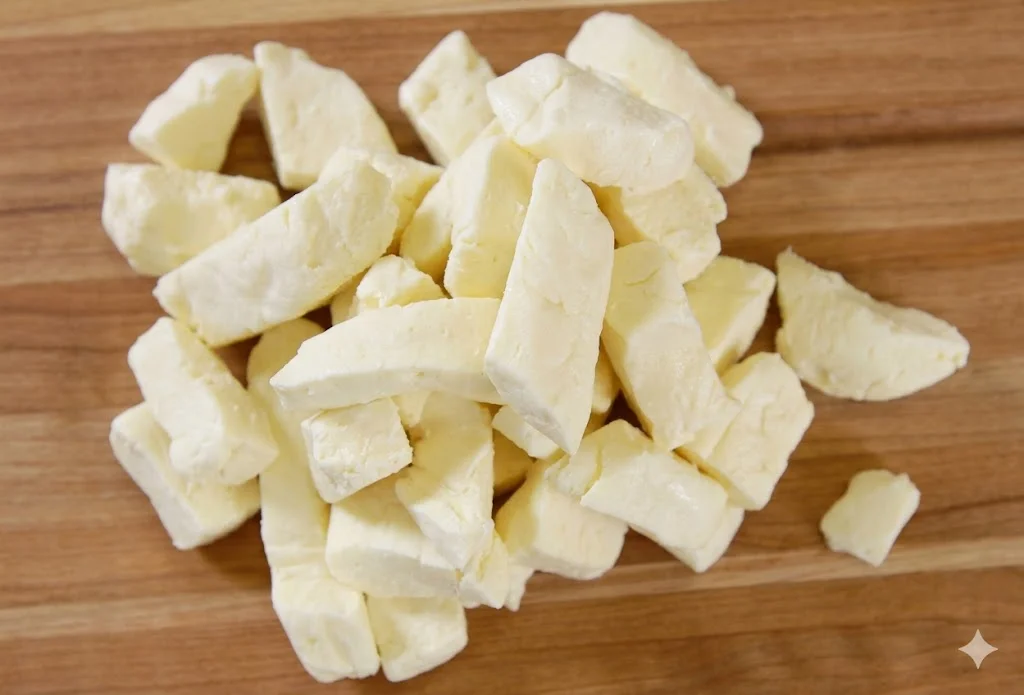
The squeak is the signature of a fresh cheese curd. It is also the easiest way to tell whether the curd you're eating was actually made today — or sat in a grocery cooler for two weeks.
The one-paragraph answer
In a fresh cheese curd, casein proteins are arranged in long, tightly bound strands held together by calcium. When your teeth compress the curd, those proteins resist and vibrate against your tooth enamel, producing a high-pitched squeak (around 1-2 kHz). The squeak doesn't last because the starter culture in the curd keeps producing lactic acid, which dissolves the calcium and loosens the protein structure. Within 12 to 48 hours under refrigeration, the structure is relaxed enough that the squeak is largely gone.
The longer answer, in four parts
1. The cheese has to be cheddared
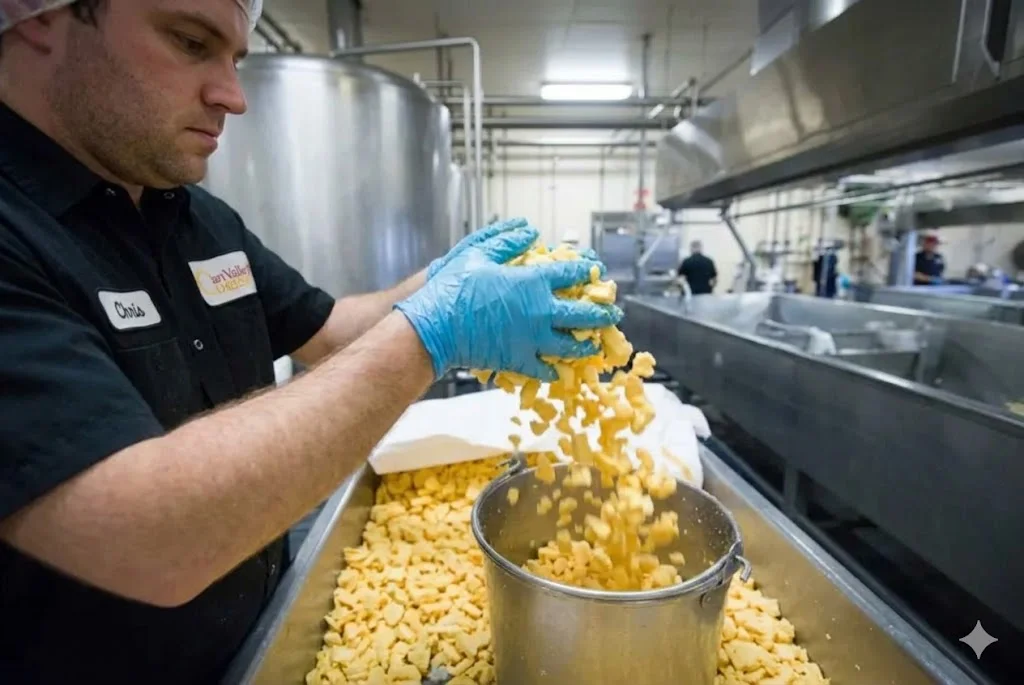
Not all unaged cheese squeaks. The squeak depends on a specific cheesemaking step called cheddaring, in which the curd mass is pressed into slabs, cut into strips, then stacked and flipped repeatedly over the course of about an hour. This pushes out remaining whey and aligns the casein proteins into long, elastic strands. Cheese curds without cheddaring are just unpressed fresh cheese — tasty but silent.
Wisconsin-style cheese curds are cheddar curds, meaning they always go through cheddaring. Cheese scientists at the Wisconsin Center for Dairy Research have specifically identified the elongated protein strands formed during cheddaring as the structural source of the squeak.
2. Casein protein meets tooth enamel
Casein is the main protein in cow's milk. In a fresh cheese curd, the casein forms an elastic three-dimensional matrix held together by calcium bonds. The structure is springy: imagine a microscopic mesh of tiny coiled springs.
When your teeth compress this matrix, the proteins push back. As the curd deforms, the protein strands slide and vibrate against the smooth, hard surface of your tooth enamel. The vibration frequency is roughly 1-2 kHz, which sits in the range humans hear well — comparable to a high-pitched squeak from a balloon, a violin's high notes, or a kazoo. Cheese researchers and marketing teams have variously described the sound as resembling "balloons trying to neck" (a New York Times comparison) or two inflated balloons rubbed together (Wisconsin Cheese marketing).
3. Calcium is the structural glue
The protein matrix only works because calcium is binding the casein strands together. Higher calcium = tighter structure = more squeak. Cheese with less calcium binding (either because of higher acidity or because of cheese type) has a looser structure and doesn't squeak.
This is why a few other cheeses, like halloumi (Cypriot) and kefalograviera (Greek), also squeak. They share the high-calcium, tightly-bound protein structure that makes the friction possible.
4. Lactic acid relaxes everything over time
The squeak fades because the cheese is still alive. Even after packaging, the starter culture continues consuming lactose and producing lactic acid. The acid dissolves calcium from the protein matrix. As the calcium leaves the structure, the casein bonds loosen and the matrix becomes less elastic. Less elastic = less friction = no squeak.
Within 12 to 48 hours of refrigerated storage, most of the squeak is gone, though the curd is still safe and tasty to eat for another week or two. After that, it becomes drier, saltier, and effectively indistinguishable from a young cheddar.
The key numbers
How to maximize the squeak
Squeak is mostly about freshness, and partly about temperature and handling. Practical rules:
Common misconceptions
"All cheese squeaks." No. Most cheese is too aged, too soft, or has too little calcium binding to produce the audible friction. Cheese curds, halloumi, kefalograviera, and a handful of similar fresh cheeses are the squeaky exceptions.
"The squeak comes from air pockets." No. Cheese curds are dense, not porous. The sound is friction between protein strands and tooth enamel, not trapped air.
"The squeak indicates the cheese is unprocessed." Partly. The squeak signals freshness, which correlates with minimal post-production processing. But cheese curds ARE processed — they go through pasteurization, culture addition, rennet, cooking, cheddaring, and salting. The squeak signals that the cheese hasn't been pressed, aged, or sitting around long enough for the protein structure to relax. Not that it skipped processing.
"Microwaving brings the squeak back permanently." No. The microwave restores squeak temporarily by tightening the protein structure with heat. The effect is short-lived — once the curd cools back to fridge temperature, the squeak is mostly gone again. For longer-term squeak preservation, freezing works better.
Frequently asked questions
How long does the squeak last?
Peak squeak: 12-48 hours after production. Good squeak: 1-3 days, refrigerated. After about 3 days, the lactic acid produced by the starter culture has dissolved enough calcium that the protein structure is too loose to make the friction sound.
Can you bring back the squeak?
Partially. Microwaving for 5-10 seconds will tighten the protein structure briefly and restore some squeak. Room temperature serving works for the same reason. Neither trick is permanent — once the calcium has dissolved out of the structure, the original squeak is gone for good. Freezing fresh curds is the only reliable long-term preservation method.
Do all fresh cheese curds squeak?
Yes, if they were cheddared properly and are still within the squeak window (under ~3 days). Cheddaring builds the elongated protein structure that creates the squeak. Curds that skip cheddaring or use a different cheese style (mozzarella, jack) often produce a much subtler squeak or none at all.
What other cheeses squeak?
Halloumi (Cyprus), kefalograviera (Greece), and some fresh paneer (South Asian fresh cheese) can squeak. All share the same combination of intact protein structure plus tight calcium binding that creates the friction effect.
Why don't grocery store cheese curds squeak?
Time. By the time most cheese curds reach a grocery cooler, they have already been in transit and storage for several days to a few weeks. The lactic acid breakdown that destroys the squeak has already happened. For maximum squeak, buy direct from a creamery or use a mail-order option that ships same-day from production.
Order fresh curds direct from a Wisconsin creamery.
The only way to fully understand the squeak is to bite into a curd that was made this week. Browse Wisconsin creameries that ship direct, or find a curd festival within driving distance.