
What is poutine?
Poutine is a Canadian dish of hot French fries topped with fresh cheese curds and brown gravy, served hot so that the gravy partially melts the curds while keeping the fries warm. It originated in rural Quebec in the late 1950s and is now a Canadian national signature, available everywhere from highway diners to fine-dining tasting menus.
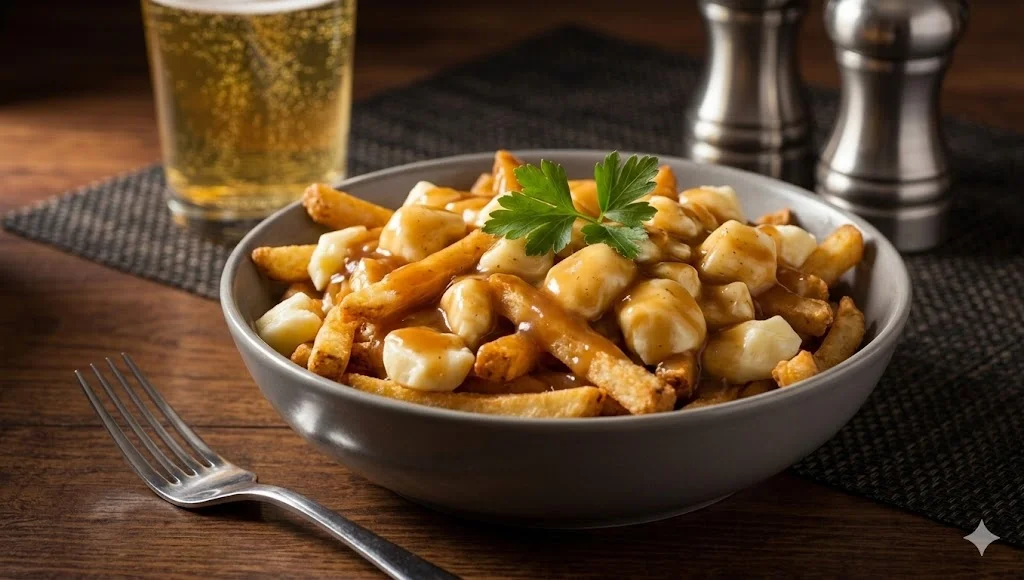
Three ingredients. Roughly sixty years of history. A delicious mess.
The quick answer
Poutine is a Quebec dish made by piling hot French fries with fresh squeaky cheese curds and pouring hot brown gravy over the top. The gravy is essential: its heat softens the curds without fully melting them and keeps the fries warm. The word "poutine" likely comes from the English word "pudding" (in French, pouding), used in Quebec slang to describe a mixture or a mess. It's pronounced poo-TEEN in English and poo-TSIN in Quebec French.
It is now Canada's most internationally recognized contribution to comfort food, served at roadside snack bars (called casse-croûtes), diners, fast-food chains, fine-dining restaurants, hockey arenas, and an annual La Poutine Week festival held across Canadian cities.
The short version, by the numbers
The three ingredients
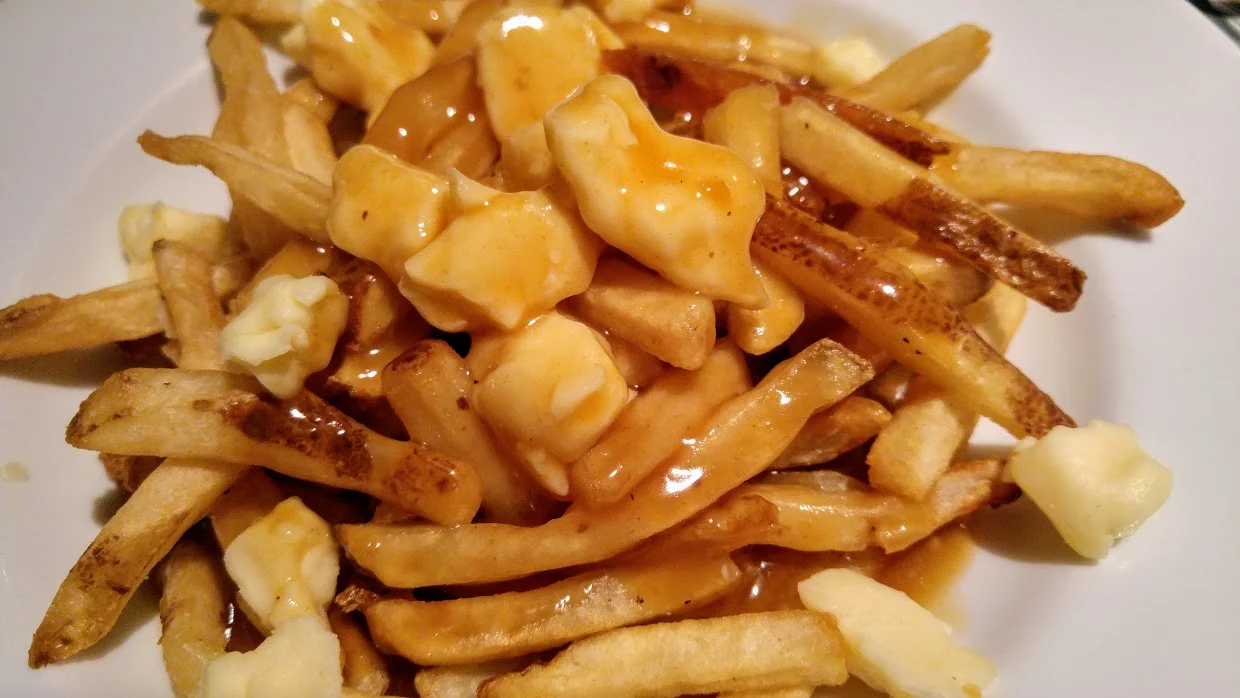
Authentic poutine has three essential components. None can be substituted without changing the dish meaningfully.
Hand-cut from whole potatoes (preferred) or high-quality frozen, fried hot and crisp. Thicker cuts hold up better under the gravy without going soggy too fast. Authentic poutine fries are double-fried or kept hot under heat lamps so they stay crispy until the moment the gravy hits.
Fresh cheddar cheese curds, ideally less than 2 weeks old and still squeaky. The curds are NOT supposed to fully melt — they should soften and partially melt at the edges where the gravy touches them, while the centers stay intact. This requires the curd's springy protein structure, which means fresh-made (not aged or shelf-old) curds. More on cheese curds →
A light brown gravy, traditionally a chicken-beef hybrid, served piping hot. Quebec recipes often use a roux-thickened gravy with chicken stock, beef stock, butter, flour, and seasoning. Some restaurants use a poultry-only gravy; some use a vegetarian mushroom gravy. The gravy must be hot enough to soften the curds on contact.
The history: two competing origin stories
Two Quebec restaurants both claim to have invented poutine, and most food historians acknowledge both contributions to the dish's evolution. The food economist Sylvain Charlebois, author of Poutine Nation, has documented this competing history in detail.
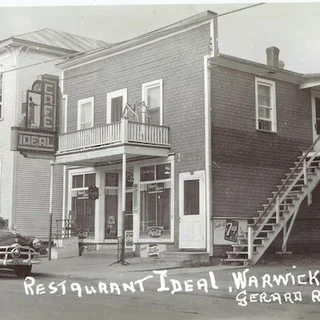
Story 1: Warwick, 1957 — Café Ideal
In Warwick, a small town in the Centre-du-Québec region near Victoriaville, a customer named Eddy Lainesse walked into Café Ideal (later renamed Le Lutin qui rit, "The Laughing Elf") in 1957 and asked the owner, Fernand Lachance, to mix fresh cheese curds and French fries together in a paper bag. Lachance reportedly replied:
"Ça va te faire une maudite poutine!"
"That'll make a damned mess!"
The dish became a hit at the café and was added to the menu, priced at 35 cents. In 1963, Lachance began serving the dish on a plate (the paper bag had been getting messy on his tables), and to keep the fries warm under refrigerated curds on the plate, he began ladling hot homemade gravy over the top. This is when poutine in its modern three-ingredient form took shape. The Lachance family still has a documented 1957 menu listing poutine.

Story 2: Drummondville, 1964 — Le Roy Jucep
In Drummondville, about 45 minutes from Warwick, Jean-Paul Roy ran a drive-in restaurant called Le Roy Jucep. Roy was a trained saucier who had worked at the Mont-Royal Hotel in Montreal. He had been serving a dish called patate-sauce (fries with a special gravy he developed) since 1958. When his customers began adding cheese curds (which he sold separately in bags at the snack counter) to their patate-sauce, Roy formalized the dish on his menu in 1964 under the name fromage-patate-sauce — later abbreviated by wait staff to "poutine."
Le Roy Jucep holds an official trademark from the Canadian Intellectual Property Office declaring it the inventor of poutine. The restaurant is still open today in Drummondville, with the certificate displayed on the wall and Roy's original gravy recipe reportedly used in the current kitchen.
The reasonable middle ground
Sylvain Charlebois's Poutine Nation argues a reasonable synthesis: the earliest version of cheese curds with fries appeared in 1957 Warwick. The first version with gravy in the form we know today is most reliably attributed to Le Roy Jucep in 1964. Both restaurants contributed to the dish's invention; the modern dish is the result of multiple Centre-du-Québec snack bars iterating on the same idea during the same period.
Either way: poutine is a Centre-du-Québec invention from the late 1950s and early 1960s. The region's proximity to local fromageries producing fresh cheese curds is widely considered a critical enabling factor.
The spread: Quebec, Canada, the world
Poutine spread through Quebec in stages. Chez Ashton introduced poutine in Quebec City in 1969. By the 1970s it was widely available in Montreal. In the 1980s it began appearing across the rest of Canada. By the 1990s it had reached the United States, primarily through Quebec expat communities and Canadian-themed restaurants.
Major fast-food chains have added it to menus. McDonald's Canada began serving poutine nationally. Burger King, KFC, A&W, and others followed. Fine-dining restaurants have also embraced poutine, with chefs creating elevated versions featuring foie gras, lobster, duck confit, or smoked meat.
In the US, poutine has spread furthest in regions with strong Wisconsin or French-Canadian heritage: the Upper Midwest, New England, the Pacific Northwest, and college towns. Many Wisconsin restaurants serve poutine with locally-made cheese curds from Wisconsin creameries — bringing the dish full circle, since Wisconsin and Quebec are the two largest fresh cheese curd producers in North America.
Common variations of poutine
Hundreds of variations exist. A few well-known ones:
How to make poutine at home
The basic home version is straightforward if you can get fresh cheese curds. The full method:
- Make the gravy. Sweat a chopped shallot in butter. Add flour to form a roux. Whisk in 2 cups warm chicken stock and 1 cup warm beef stock. Add Worcestershire sauce, a splash of cider vinegar, salt, pepper. Simmer 10-15 minutes until thickened. Hold hot.
- Cut and fry the potatoes. Cut russet potatoes into 1/2-inch sticks. Soak in cold water for 30 minutes. Drain and pat dry. First fry at 300°F for 4-5 minutes until tender but pale. Drain. Then second fry at 375°F for 3-4 minutes until golden and crispy. Salt immediately.
- Assemble immediately. Pile hot fries in a shallow bowl or on a plate. Scatter fresh cheese curds (room temperature works best) over the hot fries. Ladle hot gravy generously over the top.
- Eat immediately. Poutine does not sit well. The fries go soggy if you wait. Serve hot, eat hot.
For the most authentic results, order fresh cheese curds from a Wisconsin creamery that ships direct. The squeak of the curd is what separates true poutine from a generic fries-and-gravy dish.
Why fresh cheese curds matter for poutine
If you substitute shredded cheese, the dish becomes something else — closer to disco fries (the New Jersey diner dish) than to poutine. The distinct character of poutine comes from the way fresh cheese curds behave under hot gravy:
They soften without fully melting. The dense, springy structure of a fresh curd partially melts at the edges where the hot gravy touches it, but the center stays mostly intact. You bite into a piece and get hot gravy on the outside, soft cheese in the middle. Shredded cheese collapses into a uniform melt; aged cheese gets greasy and stringy. Fresh curds hit a unique middle ground.
They retain some squeak. If the curds are very fresh (under 2 weeks), even after the gravy hits them you can still hear and feel the signature squeak. This is the texture marker that separates real poutine from imitations.
For more on the squeak: read our explainer on why cheese curds squeak.
Where to find good poutine
In Quebec: Le Roy Jucep (Drummondville, the inventor by trademark), La Banquise (Montreal, 24-hour spot with 30+ variations), Chez Ashton (Quebec City chain), Au Pied de Cochon (Montreal, upscale).
Across Canada: Smoke's Poutinerie chain has locations across most provinces. Hundreds of independent restaurants serve poutine.
In the US: Wisconsin restaurants frequently offer poutine using local cheese curds. Look for it at sports bars, supper clubs, and Wisconsin-style restaurants. The Pacific Northwest, New England, and college towns also tend to have at least one good poutine spot.
Frequently asked questions
Who invented poutine?
Two restaurants both claim invention. Café Ideal in Warwick (1957) introduced cheese curds with fries; the owner, Fernand Lachance, added gravy in 1963. Le Roy Jucep in Drummondville (1964) is the only restaurant holding an official trademark from the Canadian Intellectual Property Office declaring it the inventor of poutine. Most food historians attribute the modern three-ingredient dish to Le Roy Jucep, while crediting Warwick for the earlier curds-and-fries combination.
What kind of cheese is in poutine?
Fresh cheddar cheese curds — ideally less than 2 weeks old, still squeaky. Not shredded cheese, not aged cheddar, not mozzarella. The curds need to soften without fully melting, which requires their characteristic fresh, dense, springy texture.
How do you pronounce poutine?
In English: "poo-TEEN." In Quebec French: "poo-TSIN" (the "t" plus "i" gets a softer "ts" sound in Québécois pronunciation). Either is widely understood.
What does poutine taste like?
Salty, savory, slightly creamy. Crispy fries (texture), soft warm cheese (texture and dairy richness), rich brown gravy (umami and salt). It's comfort food — not delicate, not subtle, decidedly indulgent. Best eaten hot, fast, with cold beer or a soft drink.
Where does the word poutine come from?
Most likely from the English word "pudding" (or French "pouding"), used in Québécois slang to describe a mixture or mess. Fernand Lachance is widely quoted as saying "Ça va te faire une maudite poutine!" ("That'll make a damned mess!") when first making the dish in 1957.
Is poutine the national dish of Canada?
Canada doesn't have an official national dish, but poutine is its most internationally recognized signature food and is treated as a national symbol both inside and outside Canada. In Quebec specifically, it is considered a cultural staple and a source of pride.
Can you make poutine without cheese curds?
You can make fries and gravy, but it isn't really poutine without the cheese curds. The fresh-curd texture is the defining feature of the dish. If you can't get cheese curds locally, several Wisconsin creameries ship them direct nationally with cold-pack shipping.
The squeak is the difference. Order fresh curds.
Authentic poutine starts with fresh, squeaky cheese curds. Browse our recommended Wisconsin cheese curds, or check out the full 101 guide.